
Anxiety often feels like a false alarm ringing loudly throughout your entire body without an off switch. Utilizing specific breathing exercises for anxiety can help silence that alarm and restore your internal sense of peace. This physical reaction is your body’s ancient defense mechanism kicking into high gear to protect you from perceived danger.
Most people try to think their way out of anxiety, but logic rarely works when your nervous system is flooded. The most effective way to communicate safety to your brain is actually through your breath. Controlled breathing practices act as a manual override for your stress response and can shift your state within minutes.
You do not need expensive equipment or hours of free time to see immediate results from this stress relief technique. We will examine specific, evidence-based breathing exercises for anxiety that you can use anywhere to regain control and calm your nervous system. These practices are simple to learn but powerful enough to interrupt even intense feelings of panic.
The Physiology of Stress and How Breathing Exercises for Anxiety Work
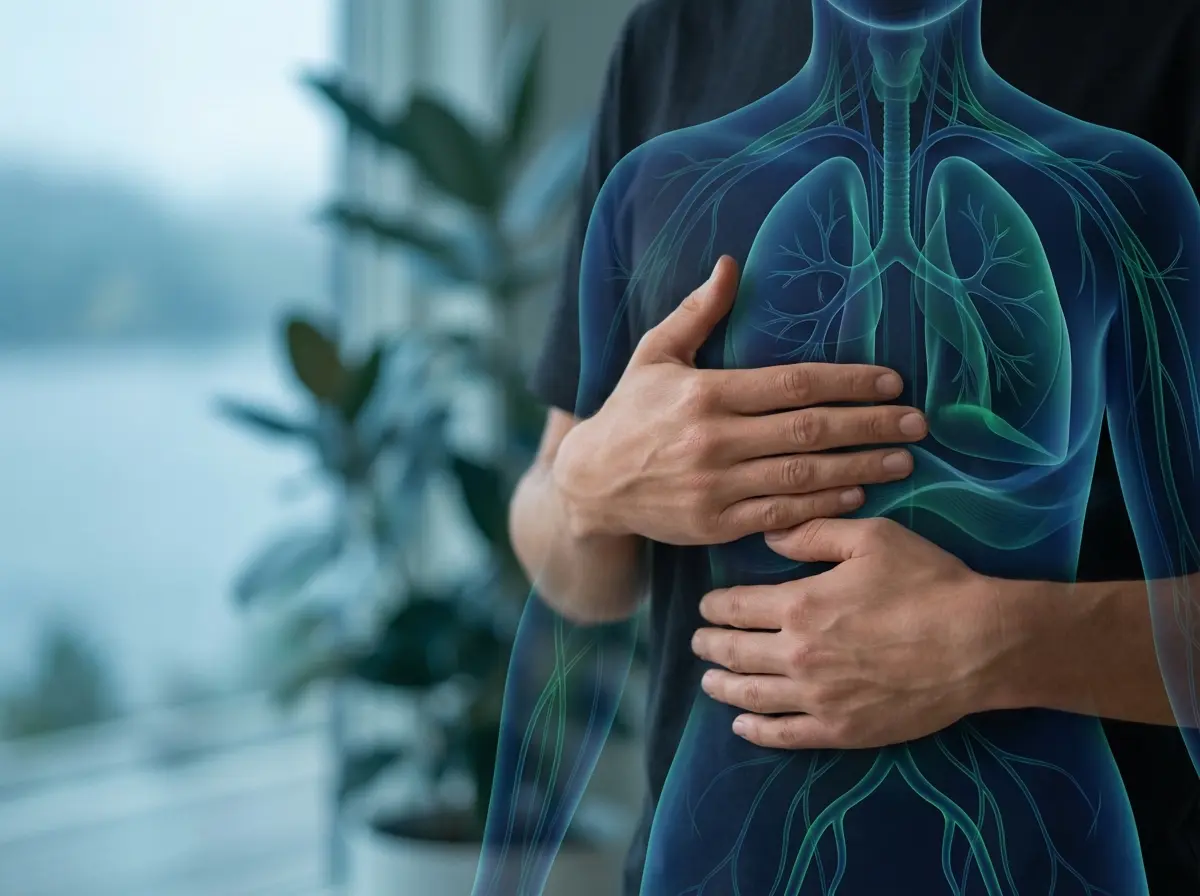
Your autonomic nervous system controls involuntary functions like your heartbeat, digestion, and breathing patterns. It operates through two main branches that work in opposition to keep your body balanced throughout the day. The sympathetic nervous system acts as a gas pedal, triggering the fight-or-flight response when you face stress.
The parasympathetic nervous system serves as the brake, helping you rest, digest, and recover from exertion. Anxiety occurs when the gas pedal gets stuck, leaving your body in a state of high alert. Breathing is the only part of this system that you can consciously control to influence the others.
Slow, deep exhalations stimulate the Vagus nerve, which sends a signal to your brain that you are safe. This physical signal forces the parasympathetic system to engage and lowers your heart rate almost instantly. You are essentially hacking your own biology to reverse the physical symptoms of anxiety through vagus nerve stimulation.
Focus on making your exhale longer than your inhale. The exhale is the specific phase of breath that triggers the relaxation response in the Vagus nerve. This simple adjustment can significantly enhance the effectiveness of your practice.
Box Breathing: A Powerful Stress Relief Technique for Immediate Focus
Box breathing, also known as square breathing, is a powerful stress relief technique favored by Navy SEALs and emergency responders. It is particularly effective because it requires counting, which distracts your mind from racing thoughts or panic. The structure creates a rhythmic pattern that regulates your CO2 levels and stabilizes your mood for better mental health.
This method is discreet enough to use in a meeting or while sitting in traffic without anyone noticing. It restores a feeling of control when everything else feels chaotic or overwhelming. You can perform this slow breathing exercise for just one or two minutes to reset your focus.
How to Perform Box Breathing
Inhale Slowly
Breathe in slowly through your nose while counting to four. Feel the air filling your lungs completely.
Hold the Breath
Hold your breath inside for a count of four. Keep your body relaxed rather than tensing your shoulders.
Exhale Slowly
Release the air slowly through your mouth for a count of four. Imagine the stress leaving your body with the air.
Hold Empty
Wait for a count of four before inhaling again. Repeat this cycle for at least four rounds.
The 4-7-8 Technique: Deep Breathing for Deep Relaxation
Dr. Andrew Weil popularized this rhythmic deep breathing method based on ancient pranayama traditions from yoga. It acts as a natural tranquilizer for the nervous system and becomes more effective the more you practice it. Many people find this specific ratio helpful for falling asleep or de-escalating anger during a panic attack.
The extended hold allows oxygen to fill your lungs and circulate throughout your body more efficiently. The very slow exhale is critical because it forces your heart rate to slow down to match the breath. You may feel slightly lightheaded the first time you try this, so practice while sitting down.
Steps for 4-7-8 Breathing
Prepare Your Posture
Sit with your back straight and place the tip of your tongue against the ridge of tissue just behind your upper front teeth.
Inhale Quietly
Close your mouth and inhale quietly through your nose to a mental count of four.
Hold the Breath
Hold your breath for a count of seven. This pause is crucial for oxygen absorption.
Exhale Audibly
Exhale completely through your mouth, making a whoosh sound, to a count of eight.
- The 4-7-8 ratio specifically targets the parasympathetic nervous system to induce calm.
- Keeping your tongue behind your teeth helps channel the airflow correctly.
- Practice this twice a day to train your body to relax on command.
Diaphragmatic Breathing for Panic Attack Prevention
Infants breathe naturally by expanding their bellies, but most adults lose this ability as they age. Stress causes us to shift toward shallow chest breathing, which actually increases anxiety signals to the brain. Relearning how to use your diaphragm is one of the most effective relaxation techniques to lower your baseline stress levels.
When you breathe deeply into your belly, you allow for full oxygen exchange in the lower lungs. This type of breathing can lower blood pressure and reduce the stress hormone cortisol. It serves as a strong foundation for all other breathing exercises for anxiety you might try.
How to Practice Diaphragmatic Breathing
Lie Down Comfortably
Lie on your back on a flat surface with your knees slightly bent. You can use a pillow under your head for support.
Place Your Hands
Put one hand on your upper chest and the other hand on your belly, just below your rib cage.
Inhale Through Nose
Breathe in slowly through your nose. The hand on your belly should rise, while the hand on your chest remains still.
Exhale Through Pursed Lips
Tighten your stomach muscles to push air out through pursed lips. The hand on your belly should go down.
Alternate Nostril Breathing for Mindfulness and Balance
Alternate nostril breathing, or Nadi Shodhana, is a practice often used in yoga to balance energy and center the mind. It involves blocking off one nostril at a time to direct airflow through specific channels. This requires a level of concentration that forces you to drop other worries and focus entirely on the present moment for improved mindfulness.
By balancing the airflow between the left and right nostrils, you may help balance the left and right hemispheres of your brain. This slow breathing technique is excellent for moments when you feel scattered or unable to make a decision. It brings a sense of harmony and mental clarity that simple deep breathing sometimes misses.
If you have a cold or sinus congestion, skip this specific exercise. Forcing air through a blocked nostril can increase pressure and cause discomfort rather than relief. Choose a different technique until your nasal passages are clear.
To practice this, sit comfortably and use your right thumb to close your right nostril. Inhale deeply through your left nostril, then close it with your ring finger. Release your thumb and exhale through the right nostril.
Keep the pattern going by inhaling through the right nostril, closing it, and exhaling through the left. This completes one full cycle of the practice. Aim to complete five to ten cycles to feel the full effects of the exercise.
Building a Consistent Routine with Relaxation Techniques
The biggest mistake people make is only trying these slow breathing exercises when they are already in the middle of a panic attack. While deep breathing helps in the moment, it works best as a preventative measure practiced daily. When you practice while calm, you build neural pathways that make it easier to access that calm state later.
Think of these exercises like fire drills for your nervous system. If you run the drill often, your body knows exactly what to do when a real fire starts. Regular practice ensures that these relaxation techniques become second nature during times of high stress.
Set a timer for just five minutes in the morning or before bed to practice one of these techniques. You can also stack this habit onto existing routines, like deep breathing while your coffee brews. Over time, your baseline level of anxiety will likely decrease as your body learns to regulate itself better.
Breathing exercises are powerful, but they are most effective when combined with other healthy lifestyle choices. Regular sleep, hydration, and movement all support a healthy nervous system and overall mental health. If you find that breathing exercises make you feel more anxious, stop immediately and return to normal breathing.
- Practice breathing techniques when you are calm to build the skill for high-stress moments.
- Consistency is more important than duration; five minutes daily is enough to see changes.
- If a technique causes dizziness or anxiety, stop and return to your normal breathing pattern.
Conclusion
Anxiety can make you feel powerless, like you’re at the mercy of racing thoughts and physical symptoms you can’t control. But here’s the truth: your breath is one thing you always have access to, and it’s more powerful than you might think.
These breathing exercises aren’t just temporary distractions but tools that rewire your nervous system’s response to stress. The more you practice them during calm moments, the more naturally they’ll come to you when anxiety strikes. Start with one or two techniques that resonate with you, practice them daily, and build that muscle memory before you need it most.
You don’t need to be perfect at these exercises for them to work. Even imperfect practice creates real physiological changes that reduce anxiety over time. Be patient with yourself, stay consistent, and trust that your body knows how to calm down when you give it the right signals.
Anxiety may not disappear completely, but with these breathing techniques in your toolkit, you’ll have the power to soften its grip and find your center again, no matter what’s happening around you.
Looking for more evidence-based strategies to manage stress and support your mental wellbeing? At Healthful Hub, we share practical guidance on anxiety relief, stress management, and holistic wellness approaches that help you feel more grounded and resilient. Discover expert tips that empower you to take control of your mental health.
