
Excess belly fat poses serious health risks and frustrates millions of people. Many spend hours doing crunches without seeing results. Losing belly fat effectively requires a smart, structured approach—not random workouts.
We’ll show the exercises and training methods that actually burn abdominal fat. You’ll learn how to maximize gym time, boost metabolism, and strengthen your core. Following these proven movements can change how your body stores and uses fat.
Understanding the science behind fat loss helps you make better workout and long-term fitness choices. By the end, you’ll have a clear roadmap to a leaner midsection and a flatter stomach.
Targeting Belly Fat for Better Health and a Smaller Waist
Before starting a new exercise program, it’s important to understand the types of fat in your body. Subcutaneous fat sits under the skin and feels soft, while visceral fat lies deep in the abdomen and surrounds vital organs like the liver.
The good news is it responds well to exercise and healthy eating. During intense workouts, your body uses visceral fat for energy, so consistent cardio and high-intensity training can shrink these fat stores and reduce your waist size.
Tracking your waist is more accurate than relying on the scale. Measure just above your hips weekly to see real changes and stay motivated as you follow your routine.
The Myth of Spot Reduction in Abdominal Fat Loss
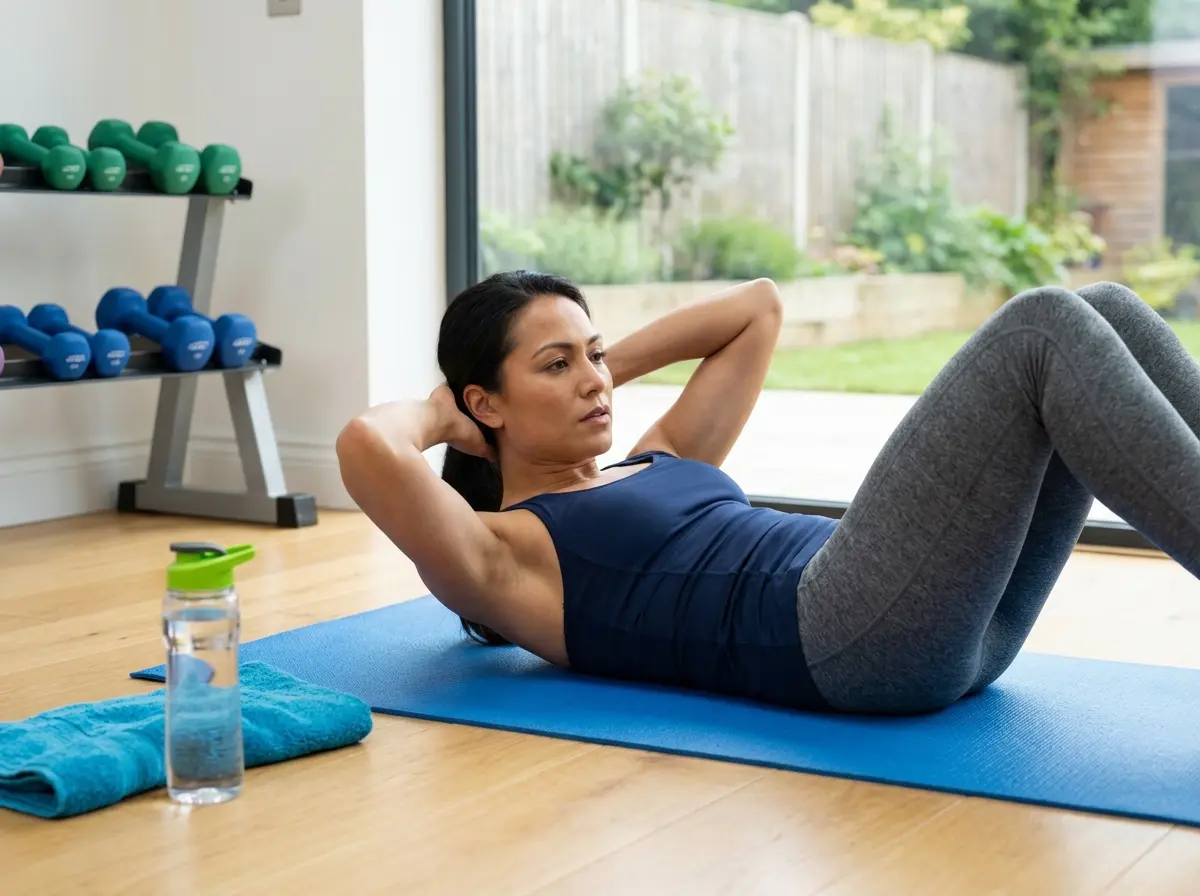
For decades, the fitness industry has promoted spot reduction—the idea that exercising a muscle burns fat in that area. Television infomercials often make this seem easy. However, scientific studies show that targeted fat loss simply doesn’t happen.
Doing hundreds of sit-ups will build your abdominal muscles, but it won’t remove the fat covering them. Fat is lost systemically from your entire body during sustained activity. Genetics and biological sex largely determine where fat comes off first.
To see your abs, you must lower overall body fat with a comprehensive fitness plan. Focus on fat-burning exercises that burn calories, not just isolation movements. Body composition strategies provide a much better framework for abdominal fat loss than endless crunches.
Belly fat can be stubborn because abdominal fat cells often resist fat breakdown. This makes the stomach the last place many people see fat loss. Staying consistent with your full-body training program will eventually reduce these stubborn reserves.
Focus on progressive overload in your heavy compound lifts rather than adding more repetitions to your daily core routine. Building overall muscle mass accelerates abdominal fat loss much faster than localized abdominal training ever could.
High-Intensity Interval Training (HIIT): The Best Exercises for Belly Fat
High-Intensity Interval Training (HIIT) is one of the most effective ways to burn abdominal fat quickly. It alternates between short bursts of maximum effort and brief recovery periods. Studies show HIIT burns more calories in less time than traditional steady-state cardio.
After a HIIT session, your body experiences Excess Post-exercise Oxygen Consumption (EPOC), which raises calorie burn even after the workout. Your metabolism stays elevated for hours as your body restores its resting state. This means you continue burning fat while doing everyday activities.
You only need 20–30 minutes of HIIT to trigger these effects. Sprint intervals on a track or stationary bike are a great starting point for beginners. Doing HIIT twice per week accelerates fat loss while minimizing the risk of burnout.
Effective HIIT Protocols and Fat-Burning Exercises to Burn Belly Fat Fast
The Tabata protocol is a popular HIIT format that delivers major cardiovascular benefits in just four minutes. It alternates twenty seconds of maximum effort with ten seconds of rest for eight rounds. This intense approach works well with kettlebell swings, cycling, or explosive bodyweight moves like burpees.
Every Minute on the Minute (EMOM) workouts provide another efficient interval structure. You start an exercise at the top of each minute, finish the reps, and rest until the next minute begins. This keeps your heart rate high while allowing short recovery periods to sustain power output.
Fartlek training offers a flexible, playful approach to intervals during outdoor runs. You alternate between sprinting and jogging along your route. This variation keeps workouts interesting while still providing the metabolic benefits of traditional HIIT.
Strength Training for Weight Loss: Boosting Resting Metabolism and Abdominal Fat Loss
Lifting heavy weights changes your body composition far more effectively than running on a treadmill. Muscle burns more calories than fat even at rest. Adding lean muscle permanently boosts your basal metabolic rate.
A higher resting metabolism means you burn calories naturally throughout the day. Compound lifts like squats, deadlifts, and presses should form the foundation of any fat-loss program. These exercises engage multiple muscle groups and joints at once for maximum effect.
Heavy lifts also work your core intensely without traditional crunches. Strength training triggers fat-burning hormones and improves insulin sensitivity. Regular lifting builds a lean, athletic physique while reducing stubborn visceral fat.
Essential Compound Movements and Lifts for Core Activation and Stomach Fat Exercises
The barbell back squat forces your core to brace against heavy downward pressure. Deep diaphragmatic breathing and strong abdominal tension keep your torso upright. This intense contraction builds core strength while burning hundreds of calories per session.
Conventional deadlifts engage almost every muscle in your posterior chain. Your abs act like a rigid corset to protect your spine from rounding under the weight. Lifting heavy from the floor also boosts metabolism and supports abdominal fat loss.
Standing overhead presses demand extreme core stability. Your abs and glutes lock your pelvis to keep the weight balanced overhead. Any weakness in your core becomes obvious as you struggle to maintain control.
- Visceral fat responds rapidly to consistent, high-intensity cardiovascular exercise and visceral fat reduction strategies.
- Spot reduction is a biological myth; you must lower your total body fat percentage.
- Compound strength training burns more calories than isolation exercises by increasing your resting metabolism.
Core-Specific Movements for Muscle Definition and Stomach Fat Exercises
Crunches alone won’t burn fat, but building strong abdominal muscles is still important. Once body fat is reduced, well-developed abs help create a toned, defined look. Effective core training should focus on stability, anti-rotation, and full-body control.
Traditional sit-ups can strain your neck and hip flexors without fully engaging your abs. Planks are more effective because they activate your entire core while keeping your spine stable. Mastering planks builds a strong foundation for more advanced core exercises.
Russian twists and hanging leg raises target different parts of your core. Twists strengthen your obliques, while leg raises focus on the lower abs and improve overall control. Train your abs like any muscle group—with proper form, resistance, and rest—for the best results.
How to Perform the Perfect Plank for Core Strengthening and Abdominal Fat Loss
Position Your Forearms Properly
Place your elbows directly underneath your shoulders with your forearms resting flat and parallel on the exercise mat.
Engage Your Lower Body
Squeeze your glutes tightly and fully extend your knees to create rigid tension throughout your entire lower body.
Brace Your Abdominal Wall
Pull your belly button upward toward your spine while maintaining a perfectly flat back from your head to your heels.
Low-Intensity Steady State (LISS) Cardio for Body Composition and Visceral Fat Reduction
Low-Intensity Steady State (LISS) cardio is a great complement to weightlifting and HIIT workouts. It involves maintaining a steady, moderate heart rate for 45 to 60 minutes. Activities like brisk walking, light cycling, or swimming fit well into this category.
During LISS, your body relies more on fat for energy. It also helps lower stress hormones that can rise after intense workouts. This makes it useful for both fat loss and recovery.
Adding a daily 45-minute walk can significantly increase your calorie burn. It’s gentle on the body and won’t interfere with recovery from strength training. Many athletes use walking as a simple way to improve body composition.
You can increase intensity by walking on an incline to engage more muscles. It’s also easy to combine with activities like listening to podcasts or reading. Making time for daily movement is key for long-term weight management.
Zone 2 cardiovascular training occurs when you maintain a heart rate between sixty and seventy percent of your maximum. This specific intensity optimizes your body’s ability to utilize stored fat as its primary energy source during the workout.
The Role of Nutrition and Caloric Deficit in Achieving a Flat Stomach
You can’t out-train a poor diet, no matter how much you exercise. Losing belly fat requires a consistent calorie deficit, meaning you burn more than you consume. Knowing your daily energy needs helps set the right intake target.
A moderate deficit of 300–500 calories supports steady fat loss without losing muscle. Cutting calories too aggressively can slow your metabolism and make fat loss harder. Slow, consistent progress is more sustainable and easier to maintain long term.
Protein is essential for preserving muscle and keeping you full while dieting. Focus on whole foods like lean meats, vegetables, and complex carbs, while limiting sugary drinks. Planning meals ahead and tracking your intake can help you stay consistent and avoid overeating.
Ready to optimize every aspect of your health and wellness? At Healthful Hub, we share science-backed strategies for healthy sleep, stress management, nutrition, and sustainable habits that help you feel your best every day. Discover expert guidance that transforms how you live and rest.
