Do you feel stiff every time you stand up from your desk, even though you exercise regularly? Tight hip flexors, shortened hamstrings, and a rounded upper back are the modern body’s default settings, quietly limiting how well you move in training and in everyday activities. A structured stretching routine for flexibility is one of the most efficient tools to reverse that pattern, and it takes far less time than most people assume.
Table of contents
- Why You Need a Dedicated Stretching Routine for Flexibility
- Static vs. Dynamic Stretching: Timing and Purpose
- The Essential 15-Minute Full-Body Stretching Routine
- Lower Body Mobility: Hips, Hamstrings, and Calves
- Upper Body and Spinal Realignment
- Golden Rules of Safe and Effective Flexibility Training
- How Long Does It Take to See Flexibility Results?
- Frequently Asked Questions About Flexibility and Stretching
- Can stretching replace a warm-up?
- Is it better to stretch in the morning or at night?
- How long should I hold each stretch?
- What should I do if I have hypermobility or past injuries?
- Does stretching reduce muscle soreness after workouts?
- Can I improve flexibility without stretching at all?
- Conclusion: Build Your Flexibility Foundation One Session at a Time
This guide covers why flexibility matters, how to time static and dynamic stretching correctly, and a complete 15-minute full-body routine you can start today, plus the safety rules and realistic timeline for results.
Why You Need a Dedicated Stretching Routine for Flexibility
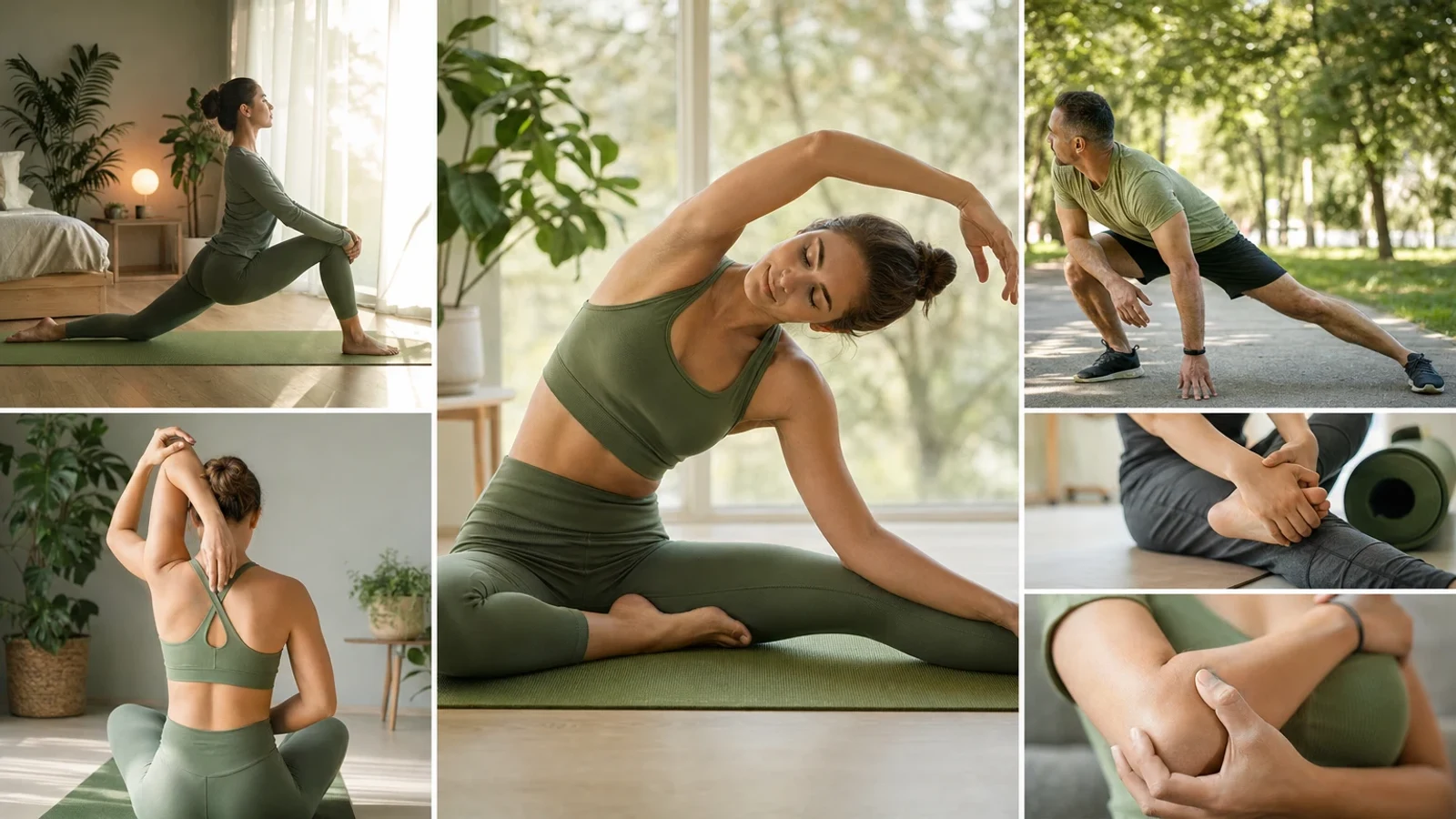
Flexibility describes how far a muscle and its connective tissue can lengthen; mobility describes how well a joint moves through its range of motion. They are related but not identical – you can have pliable hamstrings yet lack control at end range. Flexibility is also joint- and muscle-specific, so a generalized approach often leaves your tightest areas unaddressed.
Research consistently shows stretching works. A large systematic review and meta-analysis of 189 studies found a moderate positive effect of static stretching on flexibility in adults, with greater improvements among people starting with poor baseline flexibility. The hamstrings responded more than the spine, useful to know when prioritizing target areas.
Part of what changes is neurological, not just structural. Consistent training downregulates the stretch reflex and increases stretch tolerance, so your nervous system becomes more willing to accept end-range positions. Long term, benefits compound: fewer posture-related aches, smoother athletic mechanics, and easier daily tasks like squatting, reaching, and climbing stairs.
Key takeaways
→ Flexibility (tissue length) and mobility (joint control) are related but distinct qualities.
→ Meta-analysis evidence shows static stretching reliably improves flexibility, especially in tight individuals.
→ Much of your early progress comes from your nervous system relaxing the stretch reflex.
Static vs. Dynamic Stretching: Timing and Purpose
A common mistake is using the wrong stretch at the wrong time. Sports medicine specialist Lauren Wichman, quoted in Cleveland Clinic guidance, separates the two: static stretching means holding a pose without moving, like a hamstring stretch, helping muscles relax and lengthen. Dynamic stretching moves a body part slowly through its full range of motion, such as arm circles, and is best before a workout or between sets.
Timing matters because prolonged static stretching right before explosive activity can temporarily reduce strength and power output. Mayo Clinic notes that stretching before sprinting may slightly worsen performance and can weaken hamstring strength. Save static holds for after sprinting, jumping, or heavy lifting.
Stretches can also be active or passive. In an active stretch, your own muscles hold the position, like lifting your toes toward your shin. In a passive or assisted stretching version, you rely on a prop, your hand, or a partner. Active versions build control; passive versions allow deeper relaxation.
- Dynamic stretching (pre-workout): dynamic shoulder rolls, dynamic hip circles, dynamic ankle circles, leg swings, and walking lunges prime joints without diminishing strength.
- Static stretching (post-workout or standalone): sustained holds at end range, ideal for cool-downs and flexibility gains.
- Acute effects: a meta-analysis of 47 studies found a single bout of stretching produces small but real range-of-motion improvements, regardless of technique, intensity, sex, or training state.
Pro tip
Pair static holds with long, slow exhales. Deep breathing activates your parasympathetic nervous system, helping muscles release tension faster than forcing your way deeper.
The Essential 15-Minute Full-Body Stretching Routine
This routine targets the muscle groups most affected by prolonged sitting: hamstrings, hip flexors, calves, chest, shoulders, and spine. Perform it after a workout or as a standalone evening session after five minutes of light movement. Hold each static position for 30 to 60 seconds per side. Short on time? A focused 5- to 10-minute version still relieves tension and preserves range of motion.
Lower Body Mobility: Hips, Hamstrings, and Calves
Your posterior chain and hip flexors take the biggest beating from desk work. These static stretches counteract that directly.
Lower body sequence
- Static hamstring stretch
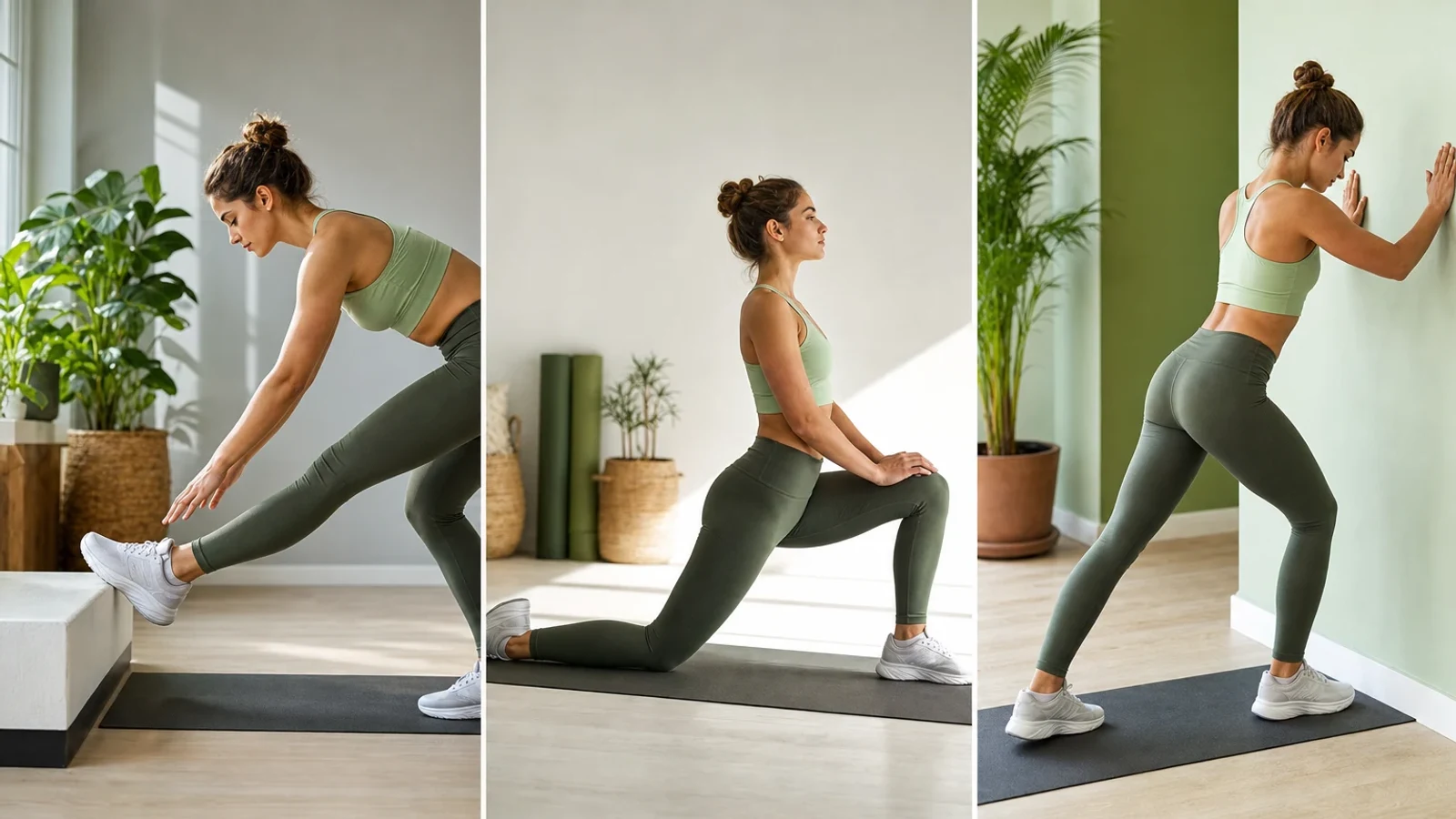
Stand facing a staircase and place one heel on the bottom step. Keep your knee straight and hinge forward from the hips with a flat back until you feel a light pull behind your thigh. Hold 30 to 60 seconds, then switch legs. If your hamstrings are very tight, use a lower step or a seated version with a strap.
Tip: A classic study on hamstring flexibility found that stretching produced significant gains over six weeks regardless of the exact frequency used, so consistency beats perfection.
- Kneeling hip flexor lunge
Kneel on one knee with the other foot forward, then tuck your pelvis under (posterior tilt) and shift gently forward until you feel tension across the front of the rear hip. Keep your torso tall. Hold 30 to 60 seconds per side. Squeezing the glute of the back leg deepens the stretch safely.
- Static calf stretch
Stand facing a wall in a staggered stance with your back leg straight and heel pressed down. Lean in until you feel tension in the hind calf. Hold 30 to 60 seconds per side, then bend the back knee slightly to target the deeper soleus muscle.
Optionally add a static quadriceps stretch: standing, pull one heel toward your glutes with knees together and hips neutral. This balances the hip flexor work and supports knee health.
Upper Body and Spinal Realignment
The upper body routine opens the anterior chain, decompresses the lumbar spine, and releases neck and shoulder tension from screens and driving.
- Cat-Cow sequence: On all fours, alternate arching and rounding your spine for 8 to 10 slow cycles, moving with your breath.
- Child’s Pose: Sit hips back toward your heels with arms extended forward to decompress the lower back and stretch the lats. Hold 45 to 60 seconds.
- Doorway chest opener: Place forearms on a doorframe at shoulder height and step through gently until your chest opens. This passive stretch reverses rounded typing posture.
- Static shoulder stretch: Pull one arm across your chest at shoulder height, shoulder blade down. Hold 30 seconds per side.
- Static triceps stretch: Reach one arm overhead, bend the elbow, and gently press it back with the opposite hand. Hold 30 seconds per side.
- Active neck stretch: Sitting tall, slowly draw your ear toward your shoulder with light hand assistance, then repeat on the other side. Keep it slow and pain-free.
Throughout every hold, breathe into your belly. Exhaling as you settle into each position signals your nervous system it is safe to release, often unlocking extra range without additional force.
Key takeaways
→ Prioritize hamstrings, hip flexors, and calves, the areas most shortened by sitting.
→ Hold each static stretch 30 to 60 seconds per side at mild tension.
→ Cat-Cow plus Child’s Pose covers spinal mobility in under two minutes.
→ Exhale slowly into each hold to deepen the stretch without force.
Golden Rules of Safe and Effective Flexibility Training
Stretching is low risk, but poor technique can do more harm than good. Mayo Clinic’s stretching essentials emphasize never treating stretching itself as a warm-up, because stretching cold muscles increases strain risk. Warm up with five to ten minutes of light cardio first, or stretch after your workout.
Follow these evidence-based rules every session:
- Warm up first. Never stretch aggressively on cold muscles; five minutes of easy cardio is enough.
- Strive for symmetry. Aim for equal flexibility side to side rather than a gymnast’s range, especially with a previous injury. Asymmetry is a recognized risk factor.
- Do not bounce. Ballistic bouncing triggers the myotatic reflex, causing the muscle to contract and potentially tighten further. Move smoothly and hold.
- Stay below pain. Expect tension, not pain. If a stretch hurts, back off to a pain-free point – think intensity around 6 to 7 out of 10.
- Target major muscle groups. Calves, thighs, hips, lower back, neck, and shoulders deserve priority, plus muscles your sport demands.
Warning
If you have a strained muscle, a chronic condition, or a hypermobility disorder such as Ehlers-Danlos syndrome, get clearance from your doctor or physical therapist before starting. Stretching an injured muscle can cause further harm.
How Long Does It Take to See Flexibility Results?
Set realistic expectations so you do not quit in week two. According to Cleveland Clinic sports medicine guidance, subtle benefits may take a few weeks, and bigger changes in range of motion may take months. Early gains are largely neurological; later gains reflect structural adaptation in muscle and connective tissue.
How much stretching do you need? The dose-response research is encouraging. The meta-regression of static stretching studies found improvements were maximized by roughly four minutes of cumulative stretching per session acutely and about ten minutes per week chronically, with no additional benefit beyond those volumes. A modest, consistent routine outperforms occasional marathon sessions.
Harvard Health similarly reports that a daily regimen delivers the greatest gains, but lasting improvement is possible stretching at least two or three days per week. A practical framework: perform your routine two to six times per week, hold 30 to 60 seconds per muscle group, and accumulate at least five minutes per major muscle group weekly. If you miss a day, simply resume – skipping regular stretching means your range of motion gradually decreases again.
Note
One controlled trial comparing 10, 30, and 60 minutes of daily calf stretching found all durations significantly improved flexibility, with the largest gains at the longest duration but a modest practical difference. Ten focused minutes daily is a highly effective starting dose.
Frequently Asked Questions About Flexibility and Stretching
Frequently asked questions
Can stretching replace a warm-up?
No. Stretching cold muscles increases injury risk, and prolonged static stretching before explosive activity can temporarily reduce strength and power. Use dynamic movements like leg swings and dynamic hip circles to warm up, and save static holds for after training. Expert consensus notes stretching in a warm-up is a viable option for acute range of motion, but not essential.
Is it better to stretch in the morning or at night?
Both work, but tissues are stiffer in the morning, so keep morning stretches gentle and brief. Evening or post-workout sessions, when muscles are warm, allow deeper static holds with less strain risk. The best time is the one you can repeat consistently, since frequency drives results.
How long should I hold each stretch?
Clinical recommendations support holding static stretches about 30 seconds, extending to 60 seconds for stubborn areas. Expert consensus for long-term flexibility suggests 2 to 3 sets of 30 to 120 seconds per muscle daily to maximize weekly volume.
What should I do if I have hypermobility or past injuries?
People with hypermobility disorders such as Marfan syndrome or Ehlers-Danlos syndrome should avoid stretching without physician approval, since their joints already move excessively. With a prior injury or chronic pain, work with a physical therapist and prioritize symmetry and control over range.
Does stretching reduce muscle soreness after workouts?
The evidence is mixed. Some research shows stretching does not reduce post-exercise muscle soreness, so treat it as a tool for flexibility, relaxation, and range of motion rather than a soreness cure. Light movement, sleep, and nutrition do more for recovery.
Can I improve flexibility without stretching at all?
Partly. Research indicates full-range resistance training, especially emphasizing the eccentric (lowering) phase, and even foam rolling can improve range of motion to a similar degree. Still, a dedicated stretching routine remains the most direct, time-efficient way to target specific tight areas.
Conclusion: Build Your Flexibility Foundation One Session at a Time
A sustainable stretching routine for flexibility comes down to three principles: warm tissues, consistent frequency, and moderate tension held long enough for your nervous system to trust the position. Fifteen focused minutes covering your hamstrings, hips, calves, chest, and spine, performed most days, will outperform any aggressive, sporadic effort. Start tonight, hold each stretch with patience, and within a few months you will move through training and daily life with noticeably greater ease.